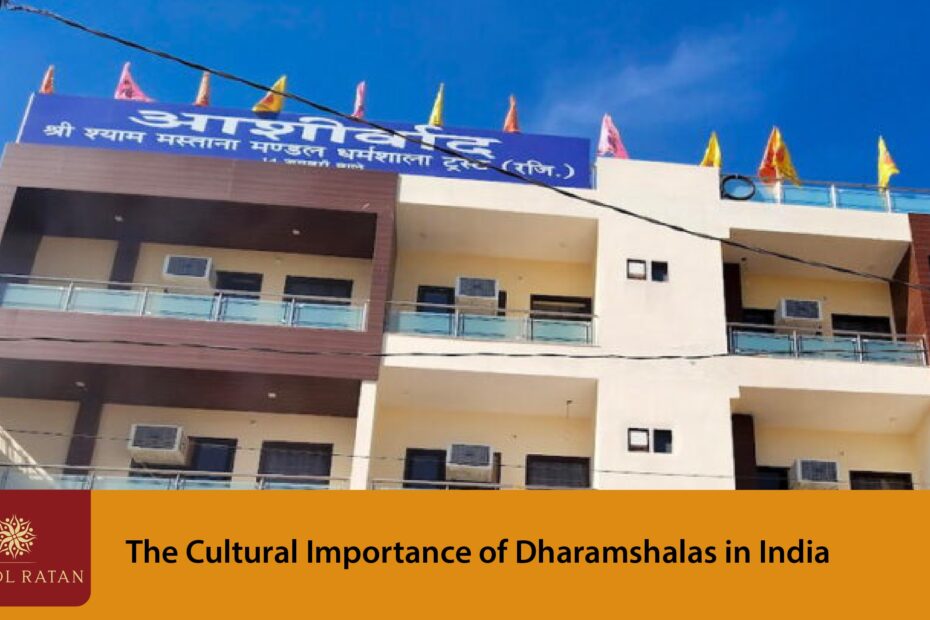
If you have ever embarked on a pilgrimage to India, you would certainly have noticed the ‘dharamshala’ that exists on the way. They are so much more than just hostels to the poor and are an integral aspect of the spiritual fabric of India itself. ‘Dharamshala’ operates under the tenets of ‘Atithi Devo Bhava’ or ‘The Guest is God’.
Such a tradition is most ardently pursued in the background of a pilgrim spot such as Khatu, located in the state of Rajasthan. A temple such as Khatu Shyam Temple is a living testimony of this fact. In such a place, Anmol Ratan Dharamshala Khatu, to name just one of them, is an important part of the religious experience of the devotees who come here from all over.
Dharamshala: It’s Much More than a Sleeping Destination
Dharamshala is a sort of public rest house. Conventionally, it has been set up in or around a region of pilgrimage. The name itself is a combination of two Sanskrit names: ‘dharma’, which is translated as ‘duty’ or ‘righteousness’ or ‘religion,’ and ‘shālā’.
Unlike other hotels, “the main motive of a dharamshala is embedded in seva or service.” These were always established “with the intention of serving religious travelers who were destined to visit distant temples and religious shrines.” To provide shelter in such a case was “an act of merit and worship.”
Dharamshalas were also constructed for a particular community or region. Such structures have long been associated with various traditions, including the Hindu yatriya paths and Sikh dharamshals/spiritual homes that evolved into Gurdwaras.
A Pilgrimage to Khatu Shyam – Where Myth Meets Devotion
This tradition is completely followed at Khatu, which is situated in the Sikar district of the state of Rajasthan. It is known for its Khatu Shyam Temple, dedicated to the worship of Barbarika, the heroic figure from the Mahabharata epic, who is blessed by Lord Krishna and is known by the name of Shyam Baba.
Every year, a large number of devotees come to this temple, especially during the time of Phalgun Mela or Shyam Mahotsav, which takes place in February – March each year. Then there are those who perform Nishaan Yatra, a 17 km trekking journey on foot from Reengus to the temple. Luxury for them doesn’t matter; it’s a matter of accessibility to their devotion.
Khatu Shyam Accommodation – Dharamshalas & More
The stay options that are available in Khatu to satisfy the requirements of devotees are:
| Accommodation Type | Key Characteristics | Example/Notes |
| Dharamshala | Free or very economical; simple environment; feeling of being part of a community; also includes free food in seva. | Anmol Ratan Dharamshala is a place that provides lodging and food services to charity causes. |
| Vishram Griha / Guest House | Essentially the same but with slightly improved facilities. Very cheap. Trusts operate. | Enumerated together with “dharamshalas” in the temple area. |
| Budget Hotels & Lodges | Organized accommodation; private rooms; toilet and cooling facilities. | Generally seen during festive seasons. |
| Websites for Online Booking | Helps in room booking in advance. Especially during melas. | “Khatu Shyam dharamshala online booking” is a common search term. |
Finding the Right Shelter – Practical Tips
While planning your stay, the following should be considered:
- Your budget
For a journey that can be aptly called a pilgrimage:
Pick a dharamshala in and around Khatu Shyam Ji Temple. The Anmol Ratan Dharamshala at Khatu is a highly revered one and established with a motive of “compassion,” “hospitality,” and “service.”
- For Comfort:
Pick upgraded dharamshalas or vishram grihas with attached bathrooms, geysers, or air-conditioned rooms. - For Convenience:
Take advantage of online booking facilities, especially during festivals. - For Ease of Accessibility:
Many individuals have a preference for having a dharamshala in or around Khatu Shyam Ji Mandir for aartis.
Note on Spelling:
It is not uncommon to come across various spellings of the same name, for example, “Khatoo” / “Dharmshala.” The proper spellings of these are Khatu Shyam and Dharamshala.
The Cultural Tapestry Woven by Dharamshalas
A dharamshala is a world by itself. Within it, the distinctions of caste, classes, languages, and states get obliterated in silence. The devotees share a room, a courtyard, prasad, and stories. The Bhakti ethos binds them.
They also make a pilgrimage a democratic experience. They have made sure that any devotee has a chance to go for a yatra owing to the free or cheap accommodations that they have made.
They have made sure that the ancient ethos of devotion is not lost in India.
To be a part of a dharamshala is not just a convenient option for staying. It is a part of a living tradition of religious hospitality.
Conclusion
The very aim of a pilgrimage is not just to reach a temple but also to go around – the people one meets, the prayers one says, the halts one makes, and the places one’s soul seeks refuge in. Whatever may be one’s plan for either staying at the Anmol Ratan Dharamshala or any other dharamshala at Khatu, one is stepping into a domain that has been molded by service, devotion, and heritage. It is here that one’s journey becomes a pilgrimage.